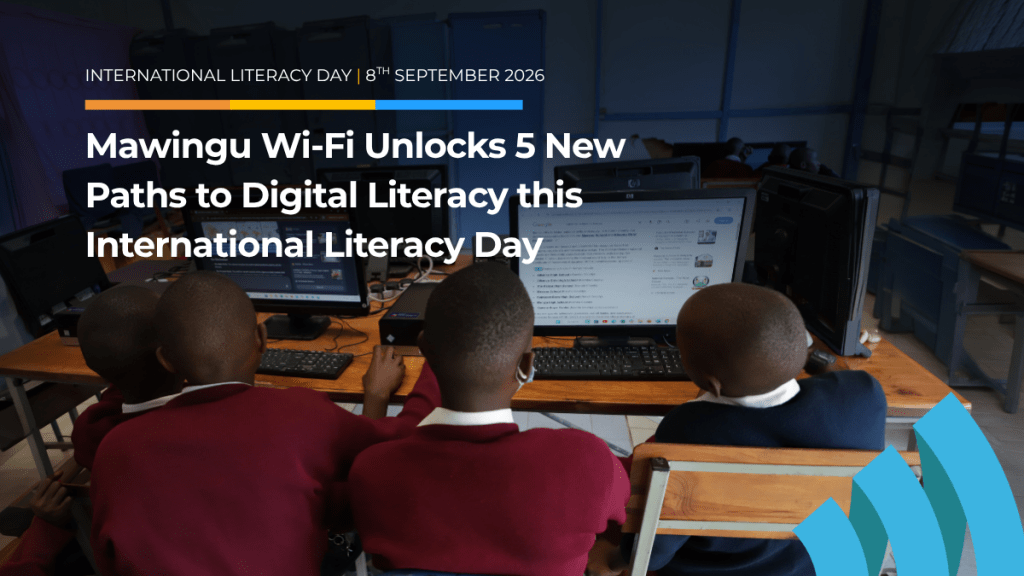

The Competency-Based Curriculum (CBC) is reshaping education in Kenya by encouraging learners to think critically, solve problems and apply knowledge in practical ways. For many schools, however, delivering this vision depends on having access to the right digital tools and learning resources.
Through support from the Mawingu Foundation, Katheka Kai Primary School in Machakos County is using reliable internet connectivity to make classroom learning more engaging, interactive and practical. Teachers are complementing textbooks with videos, images, and online educational resources, helping learners better understand concepts that can be difficult to explain using traditional teaching methods alone.
For Headteacher Samuel Wanjau, access to digital content has transformed the way lessons are delivered.
“There are topics that are difficult to explain using words alone. With Mawingu Wi-Fi, we simply open a video or image, and learners are able to understand much faster,” he says.
Whether teaching Agriculture, Creative Arts or Music, teachers are using digital resources to demonstrate concepts visually before learners apply them through classroom activities. Lessons that once relied heavily on imagination now allow learners to see real-life examples, making learning more meaningful and improving participation in class.
Senior Teacher Alfonce Makau says digital resources have also changed how teachers prepare for lessons.
“Instead of relying only on textbooks, we now use videos, images and other online resources to make lessons more practical and engaging. Learners participate more because they can easily relate to what they are seeing and hearing,” he says.
Beyond supporting classroom instruction, internet connectivity is helping these teachers strengthen their own professional practice. They use online platforms to prepare lesson plans, research teaching materials, verify information, and collaborate with colleagues. Recently, the school successfully completed a three-day virtual teacher training programme without network interruptions, allowing teachers to build new digital skills and immediately apply them in their classrooms.
This reflects the broader vision of the Mawingu Foundation: ensuring that schools are not only connected to the internet but also able to use connectivity in meaningful ways that improve teaching and learning. By expanding access to digital tools and educational resources, the Foundation is helping teachers create richer learning experiences while equipping learners with the digital skills they need for the future.
According to the school, learners are increasingly engaged during lessons that incorporate digital content. Access to videos, images and online resources is encouraging curiosity, improving classroom participation, and helping learners connect theory with real-world experiences.
After experiencing these benefits firsthand, Wanjau believes more schools can benefit from meaningful connectivity.
“Schools that are yet to embrace connectivity should do so. Mawingu is reliable, affordable, and it has made our work easier,” he says.
Farouk Ramji, CEO of Mawingu, says meaningful connectivity is about creating opportunities that extend far beyond internet access.
“When teachers have the right digital tools, they can deliver more engaging lessons, support better learning outcomes and prepare learners for an increasingly digital future. That is the kind of impact we want to see in more schools across Kenya,” he says.
As digital learning continues to shape the future of education, access to meaningful connectivity is becoming increasingly important in helping schools deliver quality learning experiences. Through initiatives led by the Mawingu Foundation, more teachers are gaining the tools to inspire learning, more classrooms are embracing digital education, and more learners are being equipped with the knowledge and skills they need to thrive in a connected world.
To learn more about Mawingu Foundation, you can contact Charles Watiri on charles.watiri@mawingu.co or visit Mawingu Foundation