
“Before internet, we only relied on standard print textbooks. It was difficult to connect classroom concepts with real-life experiences, but now teaching and learning have become much easier,” says Deputy Head Teacher Nyaga Job.
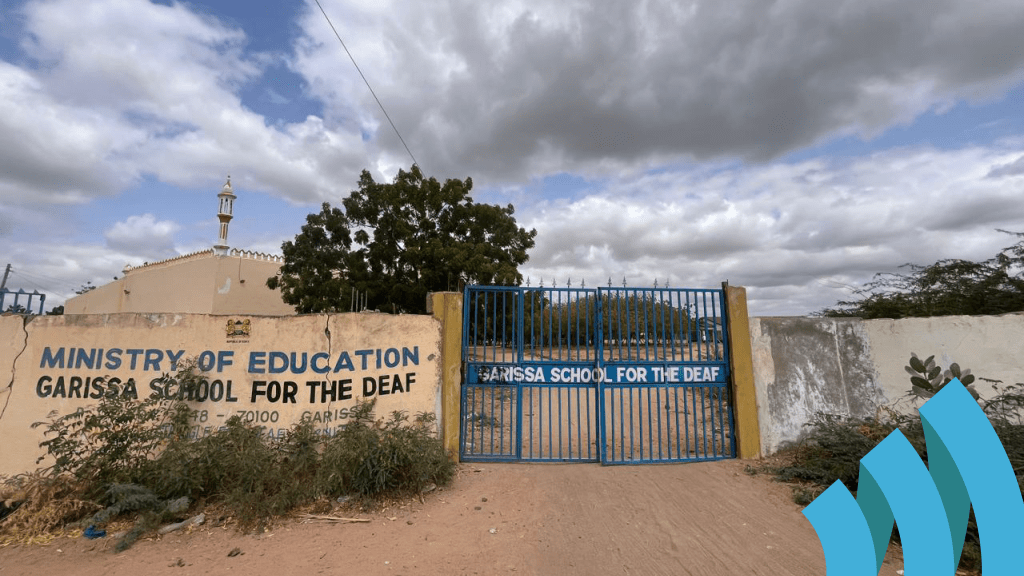
His experience reflects the changes taking place at Garissa School for the Deaf, where reliable internet is giving teachers new ways to deliver lessons and helping learners access richer learning experiences.
Established in 2007, the school provides specialized education for deaf learners from Garissa County and neighbouring parts of Tana River and Wajir. Today, it serves about 160 learners from Early Childhood Development (ECD) Junior Secondary and Senior School.
Until recently, teachers relied almost entirely on printed textbooks. While these resources formed the foundation of learning, they offered limited opportunities to use visual and interactive content – an important part of learning for deaf learners.
That began to change through a digital inclusion initiative supported by the Internet Society Foundation and implemented by the Mawingu Foundation. The initiative introduced reliable internet connectivity and equipped teachers with practical digital skills, giving them new ways to bring lessons to life while helping learners access richer learning experiences.
Learning Beyond the Textbook
Reliable internet has given teachers access to digital resources that make lessons more engaging and easier to understand.
Among them is eKitabu, a digital learning platform that integrates Kenya Sign Language into educational content. Learners can now look up words, understand their meanings, and build sentences using sign-supported resources that complement classroom learning.
Equipping Teachers for the Digital Classroom
Through the Mawingu Foundation’s ICT Integration in Education Programme, teachers received practical training on digital tools including Google Classroom, Gmail, WhatsAp, and virtual meeting platforms.
One of the teachers who has embraced these digital tools is Levina Orwa, who teaches English Literature and Kenya Sign Language. She says the training changed how technology is used in the classroom.
“We learnt how to integrate ICT into our classes using Google Classroom, WhatsApp, Gmail and other digital tools. We also learnt that ICT doesn’t just end in our schools. It goes to the community too because ICT is everything and it’s the future.”
The programme also introduced teachers to online safety and cybersecurity, knowledge they have continued to share with fellow teachers and members of the wider community.
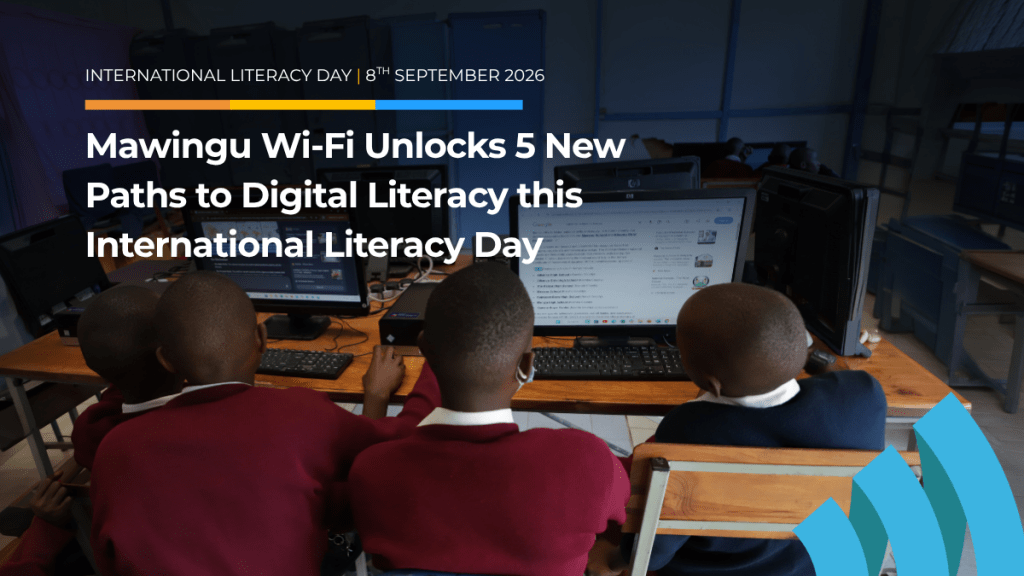
The benefits of internet connectivity are not only seen in lesson preparation but also in the classroom itself.For PP1 teacher Hussein Cheikh Ahmed, the impact is visible every time a lesson begins.
“Before, we never had internet here at school. It was hard to teach the children because we had limited resources. After the Mawingu training, we learnt how to project lessons, search for information online, and use digital tools in our classrooms. Now we are projecting learning materials. The children see, they watch, they enjoy learning, and they become happy.”
Instead of depending solely on printed textbooks, teachers can now use videos, images, and online educational resources to explain concepts more clearly. For deaf learners, visual learning is essential, making these digital tools an important part of the classroom experience.
Connecting Schools to Opportunity
Education becomes more inclusive when every learner has the opportunity to benefit from technology. With support from the Internet Society Foundation, Mawingu Foundation is helping bridge the digital divide by bringing reliable internet connectivity and digital skills training to schools in underserved communities. These efforts give teachers the confidence to integrate technology into learning while expanding access to quality educational resources for learners.
According to Mawingu CEO Farouk Ramji, meaningful connectivity is about more than getting people online. It is about creating opportunities for learners, educators, and communities to access knowledge, build digital skills, and participate fully in an increasingly connected world.
That vision is already evident at Garissa School for the Deaf, where reliable internet is giving teachers new ways to deliver lessons and helping deaf learners access digital resources that support how they learn. Through partnerships such as the Internet Society Foundation, Mawingu Foundation is demonstrating how connectivity, combined with digital skills, can help create more inclusive learning environments.
As Mawingu continues to expand reliable connectivity across Kenya, the company remains committed to ensuring that more schools, learners and communities have access to the digital opportunities they need to learn, grow and thrive.
To learn more about Mawingu Foundation, you can contact Charles Watiri on charles.watiri@mawingu.co or visit Mawingu Foundation