What Changes When a School Gets Reliable Internet?
Imagine two pupils working on the same school assignment. One attends school in Nairobi, where online learning resources may be available both at school and at home. The other attends a rural school where access to reliable internet may be more limited.
Both pupils have questions, ideas, and the desire to learn. But do they have the same resources to explore those ideas?
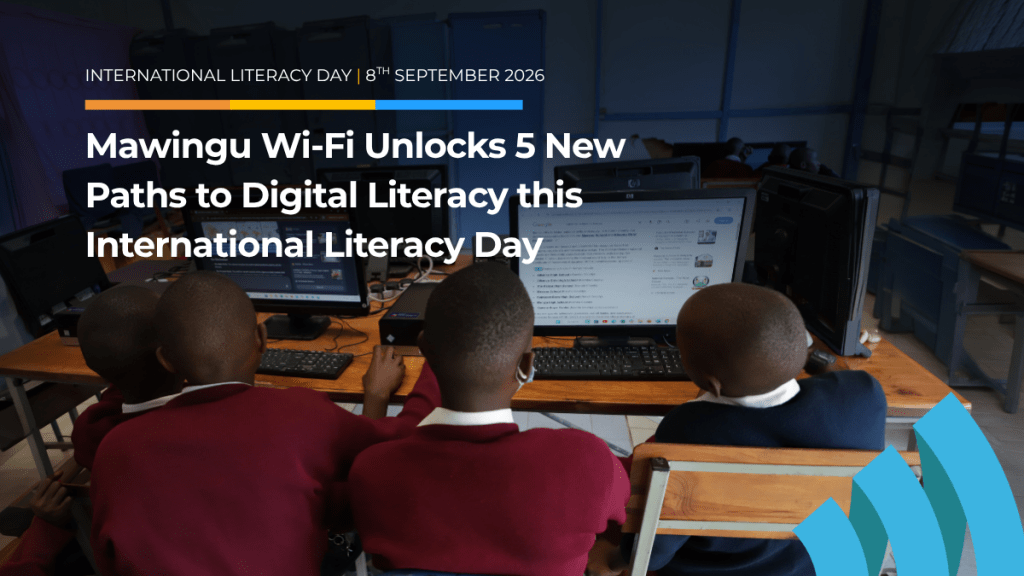
For learners at Volunteer Primary School in Wajir East, Wajir County, access to the internet is opening up more possibilities. Since the school connected to Mawingu Wi-Fi in 2025, it has reported faster, more reliable internet, improvements in teaching and learning, better digital skills, and improved grades.
The experience highlights why internet access matters in education, particularly for schools working to give learners more opportunities to explore the world beyond their immediate surroundings.
Bringing More Learning Opportunities into the Classroom
A textbook remains an important learning resource, but the internet gives teachers and pupils another way to explore a subject. Teachers can search for educational materials, while learners can discover information, explore new topics and develop their digital skills.
Volunteer Primary School reports that connectivity has improved teaching and learning. The school has also reported better digital skills and improved grades, although it has not provided figures showing the extent of these changes.
These improvements matter because digital skills are becoming increasingly important in education and everyday life. Learners need opportunities to become familiar with technology, find information and understand how to use digital resources.
Reliable internet in Kenya can help schools create these opportunities. However, a connection alone does not guarantee better grades. Teachers need to be able to use online resources effectively, and learners need opportunities to put what they discover into practice.
For Volunteer Primary School, having internet access provides another resource to support that process.
Closing the Digital Gap Between Urban and Rural Schools
A pupil’s access to learning resources can be shaped by where they go to school and what resources are available to them. Some urban schools benefit from established digital facilities, while rural and underserved schools may face greater challenges accessing reliable internet. There are differences within both settings, but unequal access to technology remains an important concern.
When a school has reliable internet, teachers can access a wider range of educational materials, and learners have more opportunities to engage with digital information. Connectivity cannot solve every challenge facing schools, but it can help remove one barrier to accessing knowledge.
This is the kind of opportunity that makes internet for schools in Kenya an important part of the digital inclusion conversation. The aim is not simply to connect more institutions. It is to help teachers and learners make meaningful use of that access.
Mawingu Foundation’s work at Masaku School for the Physically Disabled is an example. There, internet connectivity gives learners more opportunities to research, explore educational resources and develop digital skills. The school serves a different learning community, but its experience reflects the importance of making digital resources accessible to more learners.
Mawingu Foundation: Connecting People to Opportunity
Education is one part of Mawingu Foundation’s wider work to extend meaningful connectivity to underserved communities. Other schools are experiencing how internet access can support learning in different ways.
At Yathrib School in Garissa, teachers use Mawingu Wi-Fi to access online information, support lessons and introduce learners to digital resources. The school also uses connectivity to support practical learning activities.
These experiences show that schools do not all use the internet in the same way. Some need better access to teaching materials, while others want to develop digital skills or make technology part of practical classroom activities. What matters is having a connection that supports their needs.
Mawingu’s mission is to Open Opportunities. For schools, that means making it easier to access information and use digital tools that can support teaching and learning.
As Mawingu CEO Farouk Ramji explains:
“Mawingu’s aim is not to simply drop an Internet cable at someone’s doorstep. We seek to help our customers access new opportunities for work, education, entertainment, and social connections through the power of the Internet.”
That idea goes beyond infrastructure. The value of connectivity lies in what people can do with it, whether that means a teacher finding a new way to explain a lesson or a learner discovering information they would otherwise struggle to access.
More Opportunities for Every Learner
A pupil’s opportunities should not depend on whether they attend school in a major city or a rural community. Reliable internet cannot replace teachers or other essential learning resources, but it can give learners more ways to explore ideas, access information and develop digital skills.
For Volunteer Primary School in Wajir East, connectivity is helping make these opportunities part of the learning experience. The school’s reported improvements in teaching, learning and digital skills offer a starting point for understanding what reliable internet can contribute to education.
Mawingu’s mission to Open Opportunities reflects the importance of making meaningful connectivity accessible to underserved communities.
To learn more about Mawingu and its commitment to connectivity, visit Mawingu or contact charles.watiri@mawingu.co .